
(Image source from: Tribuneindia.com.https://tinyurl.com/27mnxyxc)
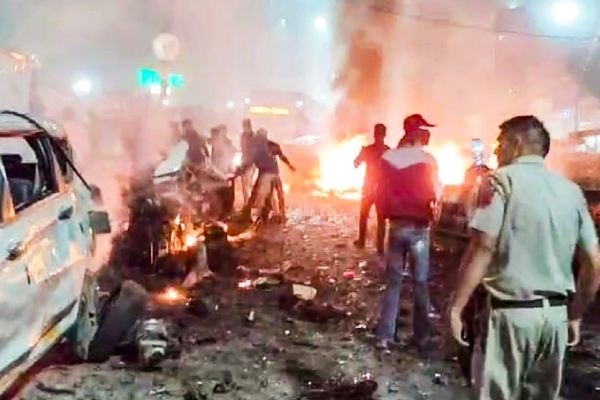
A United Nations team that monitors counter-terrorism has identified the Pakistan-based group Jaish-e-Mohammed (JeM) as being associated with a deadly incident at Delhi's famed Red Fort and has expressed additional worries about the group's changing methods, including starting a women-only group to help with terrorist activities. In its most recent report to the UN Security Council, the Analytical Support and Sanctions Monitoring Team noted that a member country reported JeM taking responsibility for multiple attacks and being connected to the assault on the Red Fort in New Delhi on November 9, which resulted in 15 deaths. The Red Fort, recognized as a UNESCO World Heritage Site and a representation of Indian authority, has consistently been deemed a critical target, making this connection especially important for regional security.
Additionally, the report disclosed that on October 8, JeM leader Masood Azhar officially introduced a women-only division called Jamaat ul-Muminat. The UN team indicated that this new group was specifically intended to assist in terrorist acts, representing a change in the group's recruitment and support strategies. Experts believe such initiatives reflect patterns observed among other extremist groups trying to widen their support network, enhance logistics, and avoid security investigations by involving women in supportive and operational roles. JeM, which the UN has classified as linked to Al-Qaida, has a long-standing record of terrorist activities primarily focused on India, especially in Jammu and Kashmir. Established in 2000, the group has been linked to several significant attacks, including strikes on both security personnel and civilian populations. Its leader, Masood Azhar, has faced UN sanctions for many years, including bans on travel and freezing of assets.
Nonetheless, the Monitoring Team pointed out differing views among Member States about the group's current state. While some countries still consider JeM to be active and dangerous, another Member State claimed that the group was no longer functioning, highlighting ongoing inconsistencies in intelligence evaluations and on-ground enforcement. These disparities have long made international cooperation against terrorism challenging in South Asia. The UN report contextualizes the developments concerning JeM within the larger framework of a complicated and changing terrorist threat landscape throughout Central and South Asia, where various extremist factions take advantage of regional instability, favorable conditions, and cross-border connections. The Monitoring Team cautioned that even with ongoing counter-terrorism pressure, groups like JeM show flexibility, whether through new recruitment strategies or significant attacks aimed at making a statement.
In a different note, the report mentioned that three people believed to be connected to a separate attack in Pahalgam, Jammu and Kashmir, were killed in July, indicating ongoing security efforts against militant groups in that area. Altogether, the findings emphasize the UN's worry that while some terrorist organizations may be weakened or divided, their capacity to reinvent themselves, reorganize, and target major places remains a serious risk to both regional and global security.