Health Authorities Evacuate Suspected Hantavirus Patients From Cruise Ship
May 07, 2026 15:49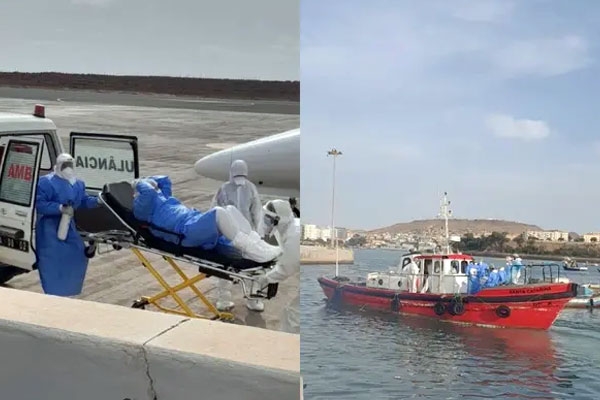
(Image source from: Guwahatiplus.com)
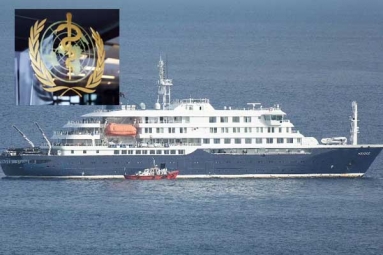
Medical evacuation teams dressed in full hazmat suits moved suspected hantavirus patients from the cruise ship MV Hondius this week as global agencies stepped up efforts to manage a rare outbreak connected to the Andes strain of hantavirus. Footage and pictures shared online displayed healthcare workers in masks and protective gear helping patients on stretchers into special air ambulances near Amsterdam and Cape Verde. The Dutch-flagged expedition ship, which has about 150 people onboard, has become the focal point of an international health crisis after three passengers died and at least eight confirmed or suspected cases were associated with the vessel. The World Health Organization (WHO) noted that the outbreak probably involves the Andes strain, which is the only hantavirus recognized to occasionally transmit between people through close interactions. As the ship makes its way to Spain's Canary Islands under tight supervision, authorities in Europe, South Africa, and Argentina are conducting contact tracing, planning quarantines, and performing lab tests to stop further transmission. Experts state that the evacuation procedure demonstrates standard WHO infection-control methods for rare but dangerous respiratory outbreaks. Hantavirus pulmonary syndrome is typically spread by inhaling particles from rodent urine, saliva, or feces. Nevertheless, the Andes strain present in areas of Argentina and Chile has shown limited transmission between individuals, particularly among those living in the same households.
Due to the unclear route of transmission onboard MV Hondius, health workers carrying out evacuations implemented stricter infection-control measures, such as wearing respirators, waterproof gowns, gloves, and eye shields. WHO recommendations for managing severe respiratory infections dictate the use of complete personal protective gear during patient transport, especially when the mode of transmission is uncertain. Photographs from Schiphol Airport captured medics in safety suits surrounding evacuated patients as they were taken to specialized hospitals in the Netherlands and Germany. Three individuals, including the ship's doctor and two crew members, were evacuated from the ship after developing serious symptoms. As reported by Reuters, two of these patients needed immediate medical attention and were flown to Europe in aircraft equipped for medical emergencies. Passengers on the ship were kept in their cabins while medics in protective clothing assessed symptomatic individuals and monitored those who were in close contact.
Spain agreed to accept the ship after requests from WHO and European health organizations for help, highlighting that the Canary Islands had the required facilities to safely isolate, evaluate, and send passengers back home. Officials in Spain indicated that medical transport and unloading would take place in controlled locations and vehicles to limit unnecessary exposure to the public. Health authorities in South Africa, Switzerland, the Netherlands, and the United States are also keeping an eye on passengers who got off earlier during the journey or had contact with sick individuals. Disease experts state that cruise ships represent particularly challenging scenarios for outbreaks since passengers are in confined areas, dining spaces, and share air systems for long durations.
The MV Hondius set sail from Ushuaia, Argentina, in April and navigated through isolated parts of the South Atlantic before the outbreak was discovered. WHO researchers now think that a passenger who was infected before boarding might have brought the virus aboard. Authorities are tracking passenger movements prior to the trip, including potential contact with rodents in southern Argentina, where the Andes strain is commonly found. Argentina has begun monitoring rodents, tracing contacts, and performing genetic analysis to understand the outbreak's source and if the virus spread among people on the ship.
Once the vessel arrives in Spain, passengers will likely go through medical evaluations, lab tests, and monitored repatriation. Spanish nationals on the ship might be quarantined in special centers, while other passengers will be watched over in their own countries. WHO states that the investigation is still active and that determining how the virus spreads requires mapping disease patterns and analyzing genetic samples of the virus. Previous outbreaks of the Andes hantavirus in Argentina have indicated that genetic analysis can help differentiate between exposure to the environment and human-to-human transmission. The removal of suspected hantavirus patients from MV Hondius has become one of the most closely observed responses to infectious disease in 2026 thus far. Images of medical personnel in protective suits assisting patients from planes emphasize how seriously officials are addressing the outbreak, even though WHO describes the overall risk to the public as low.
As inquiries proceed, the event is anticipated to provide valuable insights into managing outbreaks on cruise ships, conducting international medical evacuations, and dealing with the difficulties posed by rare zoonotic diseases that can transmit between humans.